Strikes on Belarus Relay Towers: How Neutralizing Border Infrastructure Cut Air Raid Alarms from 18 to 3 Hours
At least 10 communication towers across southern Belarus failed over 10 days. A targeted strike on a relay mast in Lelchytsy, used by Russian forces to coordinate Shahed drone strikes, caused air raid alerts in nearby Ovruch to plummet from 18 to 3 hours daily.
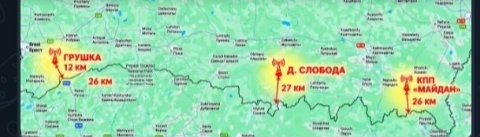
An unprecedented campaign to dismantle hostile electronic infrastructure is unfolding along Ukraine's northern frontier. Over the past 10 days, at least 10 cellular base stations and relay complexes across southern Belarus have failed under unexplained circumstances. The defining breakthrough came with a precision strike on a telecom mast in the border village of Lelchytsy, Gomel Region, triggering a dramatic drop in drone activity over northern Ukraine.
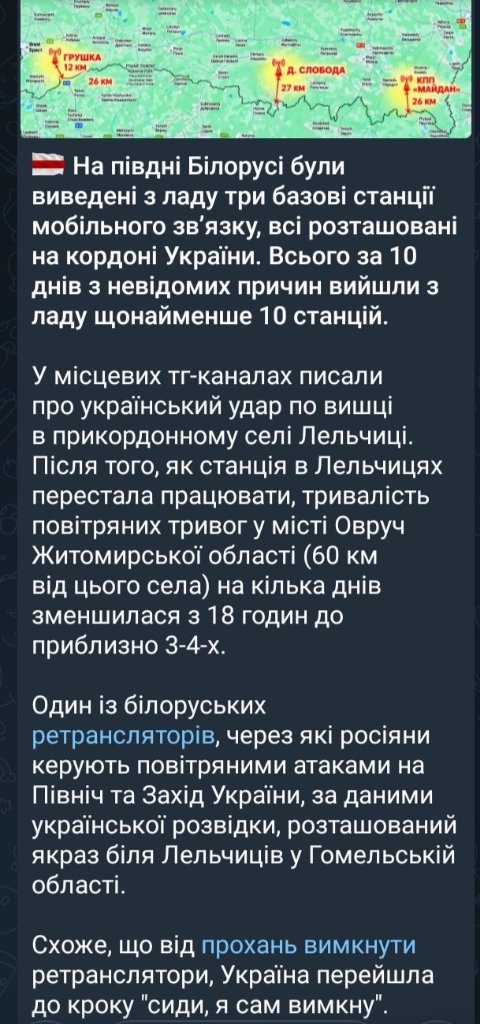
Lelchytsy Relay Neutralized: Alarms Plunge by 80%
Ukrainian military intelligence reports confirmed that Russian forces had systematically integrated Belarusian cellular towers into their strike architecture. The relay mast at Lelchytsy served as a forward command link, feeding telemetry and real-time flight corrections to Russian Shahed-136 loitering munitions traversing Zhytomyr, Kyiv, and Rivne regions.
The operational outcome was immediate and quantifiable. In the city of Ovruch, Zhytomyr Region, located 60 kilometers south of Lelchytsy, the duration of daily air raid alarms collapsed from a grueling 18 hours per day down to approximately 3 to 4 hours. This dramatic fivefold decrease offers undeniable empirical proof that Russian drone route maneuvers relied directly on Belarusian civil tower relays.
Systematic Blackout of Belarusian Border Nodes
Beyond Lelchytsy, communication blackouts have struck multiple border hubs, including Hrushka (12 km from the border), Slabada (27 km), and areas adjacent to the Maydan checkpoint (26 km). Despite repeated diplomatic warnings from Kyiv demanding that Minsk cease facilitating Russian aerial attacks, Belarusian telecommunication assets continued operating as Russian military extensions.
Defense analysts emphasize that degrading this border relay network blinds Russian operators in low-altitude corridors, preventing evasive maneuvers against Ukrainian mobile air defense units and electronic warfare interceptors.
Key Facts and Figures
- 10 base stations disabled along the Belarus-Ukraine border over a 10-day span.
- 60 kilometers between the disabled Lelchytsy mast and the Ukrainian city of Ovruch.
- From 18 to 3-4 hours: daily air raid alert duration drop in northern Zhytomyr.
- Shahed-136 guidance: primary military utility of the neutralized telecommunication nodes.
Neutralizing relay assets in southern Belarus effectively shuts down low-altitude infiltration corridors, forcing Russian drone launches further east into dense air defense kill zones.
Article Tags:
Related Stories

Daily War Briefing: Frontline Situation, Air Defense Operations & Key Security Developments
Daily security and war briefing: EU extends EUMAM Ukraine military assistance mission until 2028 with €300M funding, and nine Zimbabwean nationals intercepted trying to join Russian forces.

Sybiha to Attend G7 Foreign Ministers Meeting in Paris
Ukrainian Foreign Minister Andrii Sybiha has arrived in Paris at the invitation of French counterpart Jean-Noël Barrot to participate in the G7 foreign ministers meeting.

Sybiha Expects Meeting with Rubio on the Sidelines of G7 Summit in Paris
Ukrainian Foreign Minister Andrii Sybiha is preparing for talks with U.S. Secretary of State Marco Rubio on the sidelines of the G7 foreign ministers summit in Paris, according to Ukrainska Pravda.